

Step into any newly refurbished Australian home, and there is a high possibility that the flooring beneath you will be vinyl flooring. This is not the curled and discoloured sheet that your grandmother used in her laundry room in the 1980s. Contemporary vinyl flooring is a superior quality product that has been designed to suit […]
Step into any newly refurbished Australian home, and there is a high possibility that the flooring beneath you will be vinyl flooring. This is not the curled and discoloured sheet that your grandmother used in her laundry room in the 1980s. Contemporary vinyl flooring is a superior quality product that has been designed to suit all types of Australian homes, including apartment buildings in Bondi, Perth family homes and Queenslander buildings in Brisbane.
If you’re looking for information on the best vinyl flooring in Australia, this article covers what types are available, current trends, city-to-city variations, and specifications to consider before you buy.
Why Aussie Homeowners Are Choosing Vinyl Over Timber
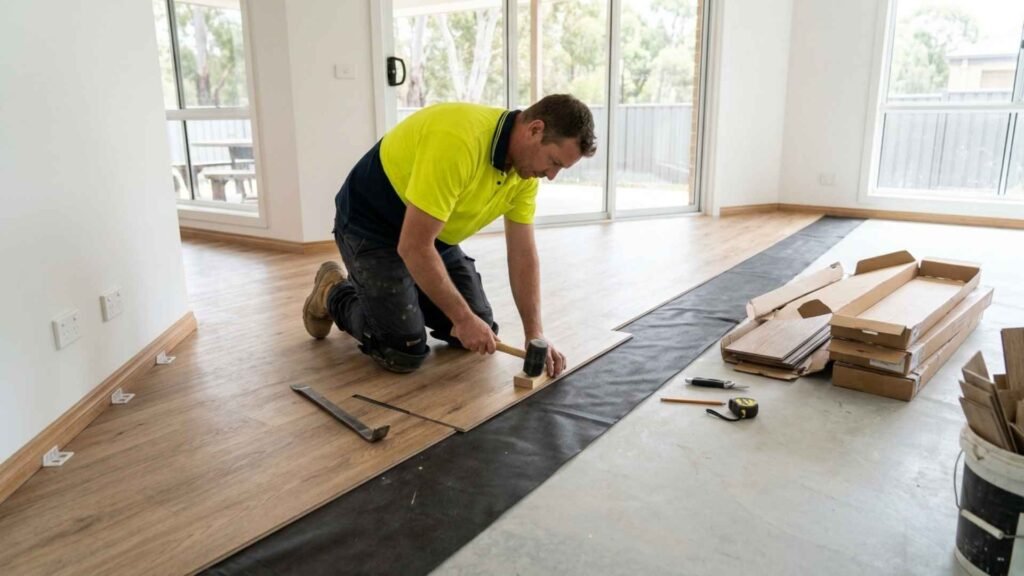
Australians are moving towards resilient, low-maintenance surfaces, and it’s easy to see why. Our homes deal with sand, red dirt, muddy paws, school-bag drag and the occasional flooded laundry. A modern vinyl floor covering handles all of it without complaint, and it feels warmer and softer underfoot than tile or concrete, which matters on a cold winter morning.
Waterproof, Pet-Friendly and Comfortable
Solid timber can cup, swell, gap or scratch when life gets messy. Quality waterproof vinyl flooring shrugs off kitchen splashes, bathroom steam and the odd dog accident. Its slight give is also kinder on joints and little feet than ceramic or stone, and the textured wear layer resists claw marks far better than most hardwoods.
Low Maintenance for Busy Households
There’s no sanding, polishing or re-oiling. A sweep and a damp mop (not a soaking one) is usually all it takes. For families, renters and investors, that low upkeep is a big part of the appeal, and it keeps the long-term cost of ownership down compared with timber.
Understanding the Types of Floor Vinyl
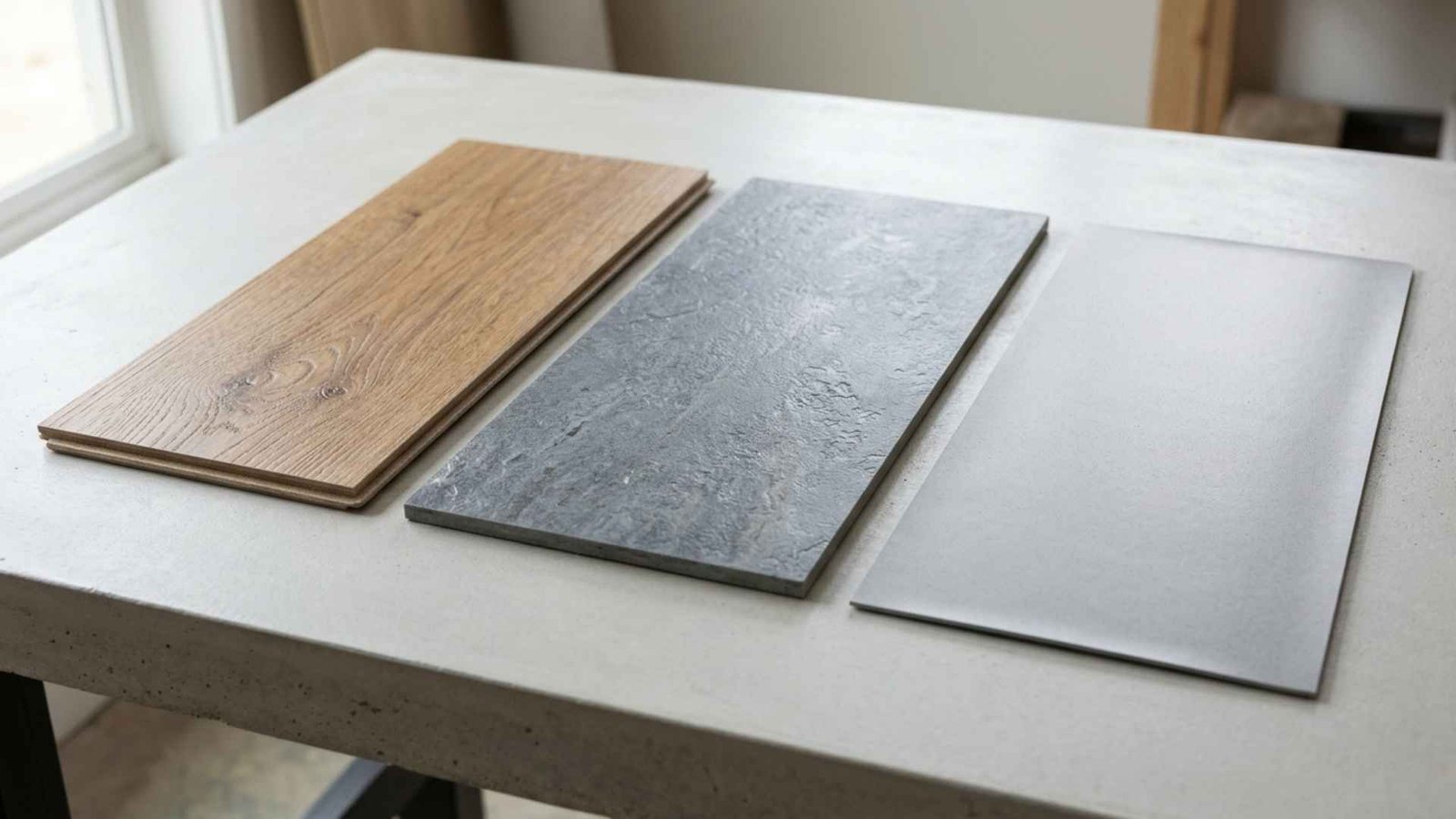
Shopping gets confusing when every retailer uses different names. Here’s a plain-English breakdown of the three main formats, so you know what you’re looking at when you compare quotes.
Vinyl Plank Flooring (LVP)
Vinyl plank flooring, often sold as vinyl wood flooring or luxury vinyl plank, mimics oak, spotted gum, blackbutt and other timber looks, complete with realistic grain and embossed texture. You get the timber aesthetic without the warping, the water-damage risk or the sanding every few years. Planks are usually click-lock, glue-down or loose-lay, which makes them a popular choice for living areas, bedrooms and open-plan spaces.
Vinyl Floor Tiles (LVT)
Vinyl floor tiles replicate polished concrete, marble, travertine and architectural stone. If you love a sleek, contemporary look but not the cold, hard feel (or the grout lines) of real stone, vinyl tile flooring is a smart middle ground. It suits kitchens, entryways, bathrooms and feature areas, and it’s much quicker to lay than ceramic.
Sheet Vinyl
Sheet vinyl comes in wide rolls with minimal joins, making it a budget-friendly, seamless option for laundries, bathrooms and rental properties. Because there are few seams for water to get into, it’s one of the most moisture-resistant vinyl flooring options available, although the design range is usually narrower than planks or tiles.
Style Spotlight: The Rise of White Vinyl Flooring
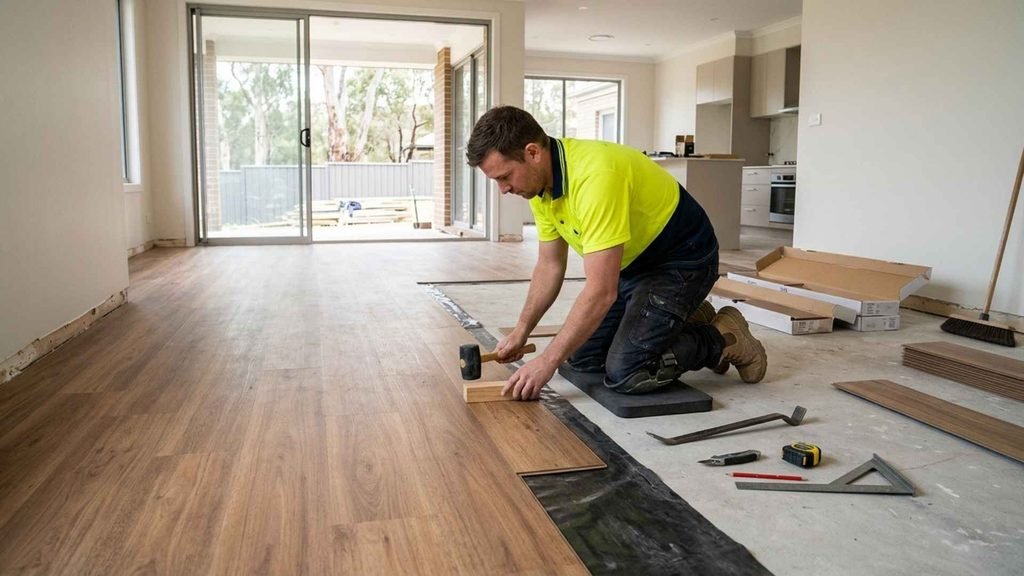
The Coastal, Hamptons, and Scandinavian styles are everywhere in Australian architecture, and white vinyl flooring is absolutely at the centre of this trend. Soft white colour, pale oak and whitewashed floors reflect natural light in the room creating the clean and calm background for furniture and accessories. Besides, the light floor will complement black furniture, natural linen, and wooden elements which is what many local homeowners dream about.
Design Tip for Small Rooms
When you have to work with small apartment or narrow terrace design, then the choice of light vinyl flooring planks installed in the longitudinal direction will create the impression of a spacious and bright room. Install the flooring according to the direction of light flow or the longest wall of the room and add some warm wooden furniture, natural fabrics and textures.
Keeping Light Floors Looking Fresh
A pale floor may be prone to showing up dirt compared to a mid-tone floor. Therefore, select a textured floor that is not flat and white. Apply felt pads under furniture and doormats on entry points to prevent any dust from being deposited on the floor.
Have you ever been unsure which color to select for your walls? Our team provides free consultations to Australians about installing the most suitable vinyl flooring. Contact us to get samples advice and understand why our clients consider us the best choice.
Best Vinyl Flooring in Australia by City: Matching Your Floor to Your Climate
Australia is huge, and a floor that thrives in Hobart won’t necessarily suit Darwin. Here’s how to match vinyl flooring to your city’s climate, housing style and building rules.
Vinyl Flooring in Melbourne
Melbourne’s cold winters, changeable weather and Victorian and Edwardian terrace extensions call for thicker planks with an attached acoustic underlay. This keeps rooms cosy and quiet, especially in double-storey inner-city renovations where footsteps carry. When browsing vinyl flooring in Melbourne showrooms, ask about thickness, insulation and sound-reduction ratings, and check that the product suits floorboards or slab, whichever your extension sits on.
Floor Vinyl in Sydney
Sydney means humid summers, salty air and a lot of coastal apartments and high-density living. Choose luxury vinyl tiles or planks with a strong wear layer to handle beach sand, saltwater traces and heavy foot traffic. If you live in a strata building, check your body corporate’s by-laws before ordering, because many require an approved acoustic underlay or a minimum impact-sound rating. Confirm this early, since it can affect which vinyl flooring in Sydney products you’re allowed to install.
Vinyl Flooring in Brisbane
Subtropical heat and humidity define Brisbane living. A 100% waterproof vinyl plank won’t expand or buckle through those steamy cycles, which makes it ideal for open-plan Queenslanders and indoor-outdoor family spaces where doors are open for much of the year. This is where vinyl flooring in Brisbane really outperforms solid timber and laminate. It also copes well with flood-prone areas where water exposure is a real concern.
Floor Vinyl in Adelaide
Adelaide’s character homes and big temperature swings suit easy-to-install vinyl floor tiles or planks that lay smoothly over old floorboards or concrete, provided the subfloor is properly prepared. It’s a sensible, value-focused upgrade for heritage cottages and older bungalows, and quality vinyl flooring in Adelaide can transform a tired room without a huge renovation budget.
Vinyl Flooring in Perth
Perth brings intense UV, modern concrete-slab builds and floor-to-ceiling windows. Look for dimensionally stable planks with UV-resistant surface coatings so your floor doesn’t fade or shift near the glass. For vinyl flooring in Perth, also ask how the product handles temperature changes across large open areas, since sun-heated slabs can stress poorly rated floors.
Wherever you live, from Melbourne to Perth, we supply and install premium vinyl flooring chosen for your local conditions. Contact us today for a tailored quote and find out why homeowners trust us as their best fit.
Quick Checklist: What to Look for Before You Buy
Before you commit, run through these essentials. They separate a floor that looks great for two decades from one that disappoints in two years.
Check the Wear Layer
The wear layer is the clear protective coating on top of the plank. For busy modern homes, aim for at least 0.5mm. Thinner layers scuff and dull faster, especially with kids, pets, rolling chairs and furniture movement. In commercial-style or high-traffic areas, go thicker.
Look at the Underlay and Backing
An IXPE foam or cork backing reduces noise, adds underfoot comfort and helps with insulation. It’s well worth the small extra cost, particularly in apartments, upstairs rooms and anywhere hard floors tend to echo.
Confirm Certifications and Subfloor Prep
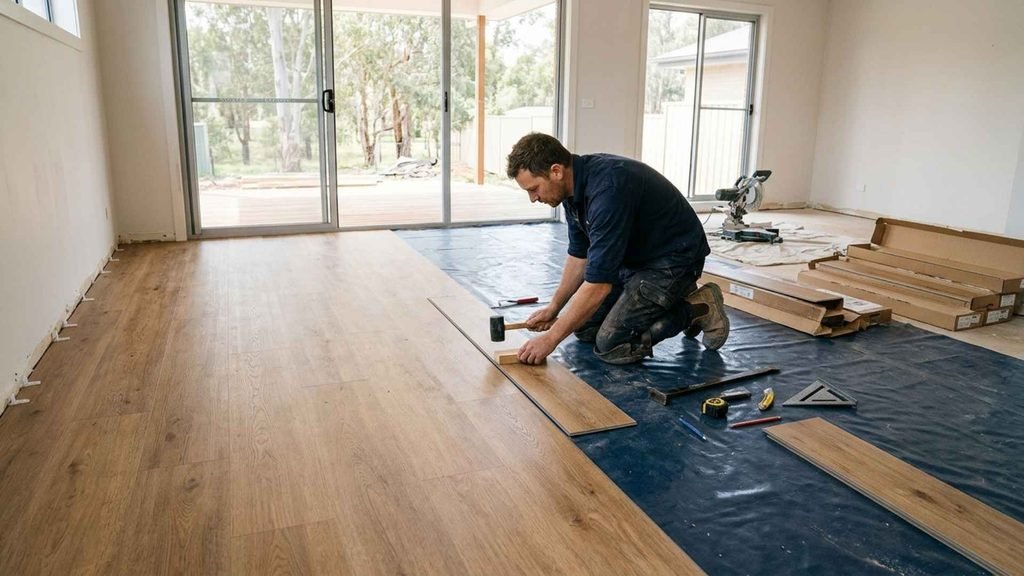
Choose products with low-VOC and phthalate-free credentials, and ask the supplier for documentation. Make sure your subfloor is clean, flat, dry and free of cracks before installation. Skipping preparation is one of the most common reasons vinyl floors fail early, and it’s usually the cheapest problem to prevent.
Compare Warranty and Installation
A solid residential warranty reflects the manufacturer’s confidence in the product. Also check what the warranty requires, such as professional installation, acclimatisation time or moisture testing, so you don’t accidentally void it.
Frequently Asked Questions About Vinyl Flooring
Can vinyl flooring be used outside in Australia?
No. Standard vinyl is rated for indoor use only. Intense UV causes fading and degradation, heat makes the planks expand, and water can pool underneath and cause problems. For decks and patios, choose products specifically designed and rated for outdoor use.
Is vinyl flooring toxic?
Modern manufacturing has improved a lot. Look for low-VOC and phthalate-free certifications to protect your indoor air quality, and ask reputable suppliers for documentation. Good ventilation during and after installation also helps.
How long does vinyl flooring last?
With proper care, quality luxury vinyl commonly lasts 15 to 25 years or more. Lifespan depends on thickness, wear layer, installation quality and how well you maintain it.
How thick is vinyl flooring?
Residential options range from thin 2mm stick-down products to premium 5mm loose-lay or click planks. Thicker products generally feel more solid and hide minor subfloor imperfections better, though preparation still matters.
What is vinyl flooring vs laminate?
Vinyl is a fully synthetic PVC product and is completely waterproof. Laminate has a wood-byproduct HDF core that can swell badly when exposed to standing moisture. That’s why vinyl is the safer pick for kitchens, bathrooms, laundries and humid climates, while laminate is better kept to dry rooms.
Final Thoughts: Choose a Floor That Fits Your Life
There is great vinyl flooring in Australia that can blend all three aspects good-looking, durable and specifications needed for the local climate. No matter if you prefer the warmth of the vinyl wood floor, stylish stone look or clean white colour, there is something for everyone, regardless of their tastes and budget. The main things to pay attention to are the wear layer, underlayment and certification process.
