


Where Can I Find Advice on My Home Renovation? 7 Proven Sources
Home renovation sounds exciting right up until the first quote lands in your inbox. Then the questions start piling up. Who do I call first? Do I need a designer, or just a builder? What will council think about the front of the house?
Most people ask a mate, search online, and end up more confused than when they began. That’s normal. There’s no shortage of advice out there. The hard part is knowing whose advice to trust.
This guide covers seven places to get solid home renovation advice in Australia, with a Sydney focus. For each one, you’ll see what it’s good for, where it falls short, and what to ask. Maybe you’re planning small home renovations, like a bathroom refresh. Maybe you’re thinking about bigger house renovations with a new level on top. Either way, you’ll know where to start.

Why Quality Home Renovation Advice Matters Before You Start
Bad advice doesn’t hurt on day one. It hurts three months later.
That’s when you find out the wall you wanted gone is holding up the roof. Or that council needed a form you never filed. Or that the cheap quote left out half the job.
Early advice is cheap compared to fixing mistakes mid-build. A one-hour chat with the right person can save you weeks and a lot of money.
It also helps to know what type of project you’re dealing with. Cosmetic changes, like paint and flooring, are one thing. Building renovations that touch walls, plumbing or the roof are another. They come with more rules, more trades and more risk.
Before you call anyone, write down three things. What do you want to change? Why? And what can you afford to spend? Every person you speak to will give you a better answer if you start there.
1. Councils and Government Websites for Home Renovation Rules in Australia
The starting point would be the local council as well as the state planning authority, even though the authorities do not design the project themselves, but determine its compliance with regulations.
In New South Wales, the NSW Planning Portal clarifies whether the development project is an exempt, complying or development application. The category determines the timeline, costs and documentation of the project.
In regard to the renovation of the facade, it is especially important to consider the regulations, which may include the heritage listing, setback, colour control and streetscaping. Making a phone call to the council prior to paying for the drawing helps to avoid costly changes.
Regarding consumer protection, NSW Fair Trading provides information about builder licensing, building contracts, insurance and dispute resolution. The same exists in other states in the form of regulatory bodies in charge of consumer protection.
The Your Home guide published by the Australian Government offers general design and planning information related to renovations and additions in easy to understand language.
Best for: rules, approvals, licensing and consumer rights.
2. Architects and Designers for Interior Renovations and Renovation Design in Australia
An architect, building designer or interior designer is the right person to ask when you are unsure what is possible.
Good renovation design starts with how you live, not with what is trending. A designer looks at light, flow, storage, structure and budget together. They then show options on paper before money is spent on construction.
For interior renovations, such as opening up a kitchen, rearranging bedrooms or adding built-in storage, an interior designer or building designer can often resolve the layout at a lower fee than a full architectural commission.
For larger or more complex projects, an architect can manage concept design, documentation and sometimes the council submission. Many offer an initial consultation or feasibility study, so you can understand scope and likely cost before committing.
Ask each designer to show completed projects similar to yours, explain their fee structure, and describe how they work with builders. The Australian Institute of Architects is a useful place to find registered professionals.
Best for: layout, design direction and planning approvals.

3. Licensed Builders for Building Renovations and Second Storey Extensions
Construction workers face the realities of construction projects every day, making them excellent consultants even prior to signing the contract.
A knowledgeable construction professional can provide insight into whether the wall might be load-bearing, whether existing electrical or plumbing systems will impact your budget, and whether certain design decisions increase your budget but not your property’s value.
For building renovations that involve structural changes, hire a licensed builder with previous experience renovating such buildings, particularly for second-story additions. It’s much harder to build an additional floor than it is to add another story to the first story of the house.
Always request a site visit rather than receiving a quote via phone. Get a minimum of three quotes in writing, and ensure that they all cover the same scope of work for a fair comparison.
Verify the license of the builder by contacting your state licensing authority and get insurance information from him or her. Licence and insurance thresholds for the residential sector in NSW will vary, so check the current requirements of NSW Fair Trading.
Best for: buildability, costing and construction sequencing.
4. Industry Associations for Sydney Home Renovations
Industry associations sit between government rules and commercial sales pitches.
Organisations such as the Housing Industry Association and the Master Builders Association of NSW publish guides, contract resources and member directories. Members are expected to meet certain standards. That gives you a starting list when you are looking for professionals who handle Sydney home renovations.
Many associations also offer consumer resources on contracts, variations and warranties. These are useful when you are comparing quotes and want a neutral view of what a reasonable contract looks like.
Membership is not a guarantee of quality, so still check references and past work. Treat a directory as a shortlist, not a final answer.
Best for: finding vetted professionals and understanding contracts.
5. Local Home Improvement Services and Supplier Showrooms
Tips can be sought close by too. Showrooms, building material suppliers and wholesalers are handling supplies on daily basis. They know the availability of products, their durability, and suitability for particular location.
If you are looking for home improvements near Sydney, then visit a couple of showrooms of tiles, windows, kitchens and cladding products. They will help you understand the delivery periods, maintenance requirements, and cost variances amongst different ranges of products.
Local home improvement companies, like carpenters, painters, landscapers and tilers, may also offer honest tips about minor projects. Talk to your neighbours about who they recommend. A tradesman working frequently in your suburb has something to lose.
Please note that suppliers sell products. So, use their tips on materials and specifications, but seek expert opinion about major issues, such as structure or approvals.
Best for: materials, finishes and small trade jobs.
6. Online Guides and Communities for Small Home Renovations in Australia
Online material is helpful when one needs basic information, particularly regarding renovations within the home such as painting, installation of fixtures, and bathroom renovations.
Renovation websites, blogs by trade associations and video tutorials can be utilised to learn about the jargon, the process, and possible errors. Community discussion boards and social media websites within the community provide information from actual cases of other homeowners within the locality.
The online information should be used for generating questions but not for decision-making. The online advice is not specific and does not consider Australian building codes.
Note the article’s publication date and the author’s credentials. Verify the technical information using an authentic source like the Australian Building Codes Board.
Best for: learning, inspiration and early-stage research.
7. Real Estate Agents and Valuers for Renovation Real Estate Decisions
Think about resale before you spend, even if you plan to stay for years. Plans change.
A local agent knows what buyers in your suburb pay for. They can tell you if a new kitchen would lift your price or if you’d never see that money again. This is the heart of renovation real estate planning.
Ask for recent sales of similar homes, not just opinions. A big extension can look great on paper and still push your home well above the street average. Buyers often won’t follow.
Agents earn money when homes sell, so keep that in mind. For a neutral number, a property valuer is the better call.
Good for: resale value and budget limits. Not good for: construction advice.
How to Prepare Questions Before Seeking Home Renovation Advice
Good advice depends on good questions. Before any consultation, gather photos of the space, a rough sketch, your budget range, your timeline, and a list of must-haves and nice-to-haves.
Then ask each professional the same core questions:
- What are the main risks with this project?
- Which approvals are needed?
- How long will each stage take?
- What could change the price?
- What is not included in the quote?
Keep notes and compare the answers. When two professionals disagree, ask each to explain their reasoning. The explanation is often more useful than the conclusion.
Build a contingency into your budget as well. The Your Home guide advises setting money aside for unexpected costs, because older homes in particular can hide issues behind walls and under floors.
Warning Signs to Watch for When Collecting Home Renovation Advice
Some advice isn’t really advice. It’s a sales pitch.
Be careful if you see any of these:
- Pressure to sign today or pay a big deposit upfront
- Quotes with no itemised breakdown
- Someone who can’t show a current licence or insurance
- Anyone who says council approval “isn’t really needed”
- Prices that look far lower than everyone else’s
If something feels off, stop. Get a second opinion. A good professional won’t mind the questions. A short delay costs far less than fixing a bad decision.
Final Thoughts on Finding Home Renovation Advice
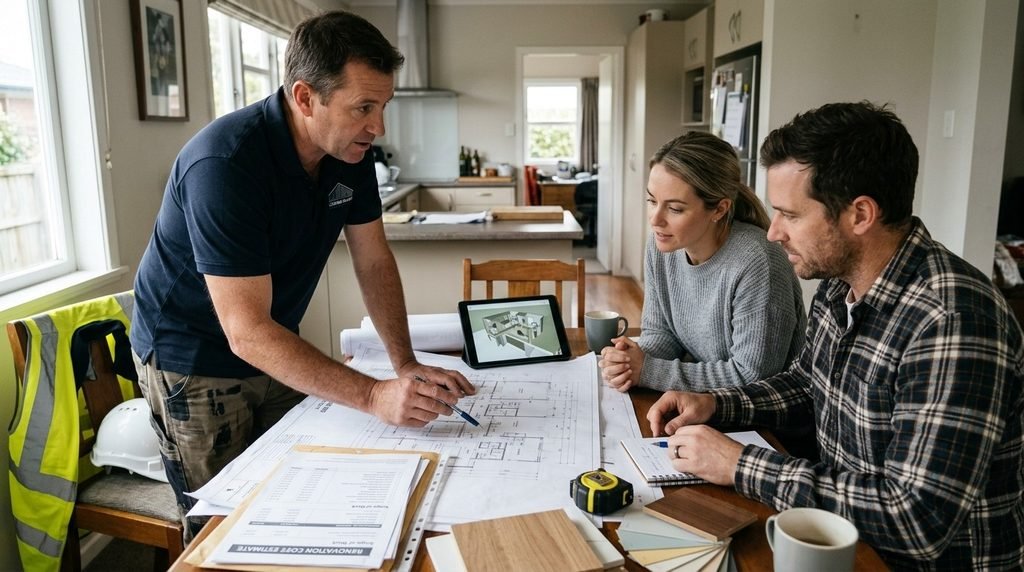
Reliable home renovation advice comes from combining several sources instead of relying on one. Councils explain the rules, designers shape the plan, builders test whether it can be built, associations help you shortlist, suppliers guide material choices, and local agents show how the market might respond.
Start with your goals and budget, gather advice in stages, and compare what you hear. Taking a little extra time at the beginning is usually the most effective way to protect your budget, your schedule and the finished result.
Frequently Asked Questions About Home Renovation
Where should one begin for home renovations advice?
Start by contacting your local council or state planning portal regarding the permits you will require. Talk to a designer or builder about the plans, feasibility and budget implications.
Are there any council approvals needed for small renovations?
It depends on the extent of work that is being planned and where you live. Most minor and cosmetic changes might not need it.
How can one choose good professionals for home renovations in Sydney?
Use NSW Fair Trading for licensing information. Get a shortlist from directories of industry associations. Ask for references and completed projects and get at least three written quotes.
Do I have to hire a designer for my interior renovations?
No, one does not necessarily need to hire a designer. But a designer can come in handy in case of major changes and tight spaces.
What should one take into account when planning for second story extensions?
First, the existing structure, footings, and services should be evaluated. Also, there will be a need for a more comprehensive design and permit process. Hire a licensed professional who specialises in this type of project.
Do renovations increase property value?
It depends on the type of renovation, the quality of the work and your local market. A local agent or independent valuer can advise which upgrades are likely to suit your suburb.


bb