
Roof shopping is stressful. You climb a ladder, spot a rusty patch, and suddenly you’re comparing steel thicknesses at 11 pm. Most people don’t know what corrugated roof sheets are really made of, how wide it covers, or what the building code says about fixing it. Order the wrong one and you can end up […]
Roof shopping is stressful. You climb a ladder, spot a rusty patch, and suddenly you’re comparing steel thicknesses at 11 pm. Most people don’t know what corrugated roof sheets are really made of, how wide it covers, or what the building code says about fixing it. Order the wrong one and you can end up with leaks, loud rain, or a roof that fades in five years.
This guide covers what you need to know before buying corrugated roof sheets in Australia: the materials, the sizes, the rules, the costs, and the upkeep. It’s written for homeowners, renovators, and shed builders, so there’s no trade slang. Let’s begin with why this roof has lasted so long.
Why Is the Corrugated Roof Still So Popular in Australia?
How Did Corrugated Iron Roof Sheets Become an Aussie Classic?
Early settlers shipped wavy galvanised iron here because it was light, tough, and easy to carry to remote places. Bush huts, woolsheds, and farmhouses all wore it. Today the sheets are rolled from modern coated steel right here in Australia, and they’re lighter and stronger than the old stuff.
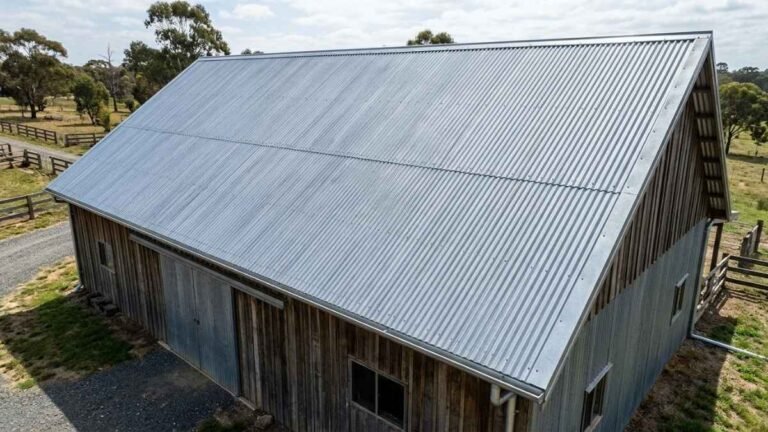
The wave shape does real work. It stiffens thin metal so it can span between supports, and it sends rain off quickly. That’s why you still see a corrugated roof on old country cottages and on brand new suburban extensions.
Are Corrugated Tin Roof Sheets Actually Made of Tin?
Not really. They are still calling it a tin roof, but corrugated tin roof panels consist of coated steel with either zinc coating or a combination of zinc and aluminium. The coating is the rust-resistant layer of the roofing material. Hence, when one asks for either tin or iron sheets, he or she is actually asking for coated steel. This knowledge helps avoid misunderstandings when reading quotations with such names as Colorbond, Zincalume.
Which Corrugated Roof Sheets Is Right for Your Place?
What Are Colorbond Corrugated Roof Sheets?
Colorbond is painted steel made by BlueScope. The paint is baked on at the factory, so it doesn’t peel the way house paint does. It comes in a range of colours, from dark Monument to pale Surfmist and soft Woodland Grey. Lighter colours reflect more heat, which helps in hot summers.
Most homes in a suburb will be Colorbond. It looks neat, needs little care, and suits resale value. If you’re building a house or doing a full reroof, this is the usual pick.
What Are Zincalume Roof Sheets in a Corrugated Profile?
Zincalume is the steel without any painting. This steel possesses a bright silver coating which gets a bit darker with time. The cost of this steel is cheaper compared to that of Colorbond. For this reason, this steel can be seen in sheds, garages, farm houses, workshops, etc.
Can You Use Clear Corrugated Sheets?
Yes. Polycarbonate, PVC and fibreglass sheets can pass light. These sheets are commonly used above verandas, patios, car ports, greenhouses, etc. Some common brands which manufacture these sheets are Laserlite and Suntuf. The design of these clear sheets is in waves, similar to metal sheets, so a clear sheet can be installed beside the metal in the same roof.
What Size and Thickness Do You Need?
What Is the Cover Width of a Corrugated Roof Sheets?
Cover width is how much roof one sheet actually covers once the edges overlap. For standard corrugated sheets in Australia, that’s about 762mm. The full sheet is wider, but you lose some to the overlap. Always measure your roof and divide by cover width. If you divide by the full width, you’ll order too few sheets and have to wait for a second delivery.
What Does Base Metal Thickness Mean?
Base metal thickness, or BMT, is the thickness of the steel under the coating. Thicker steel is stiffer and dents less when someone walks on it or a branch lands on it. Many residential jobs use around 0.42mm. Heavier-use roofs may call for 0.48mm. The right choice depends on your product and how far the sheets span between supports, so check the manufacturer’s span table before you order.
What Pitch Does a Corrugated Roof Need?
Pitch is the slope of your roof. A corrugated roof generally needs at least 5 degrees so water drains properly. Below that, rain can back up at the laps and leak. For a very flat roof, profiles like Trimdek or a concealed-fix system such as Cliplock handle water better. Measure your slope first. It’s a five-minute job with a digital level, and it can save you from an expensive mistake.
What Rules Apply When You Fix Corrugated Roofing?
How Do Fixing Patterns Change in Cyclone Areas?
Australia is split into wind regions, and the fixing rules change with them. In cyclone-prone parts of Queensland, the Northern Territory, and northern Western Australia, sheets need more fasteners and often stronger washers. In southern states, the pattern is lighter. The National Construction Code and the sheet maker’s installation guide set the exact pattern, so don’t copy what your neighbour did. A sheet that lifts in a storm becomes flying debris.
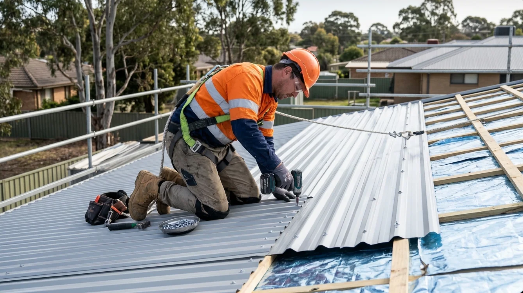
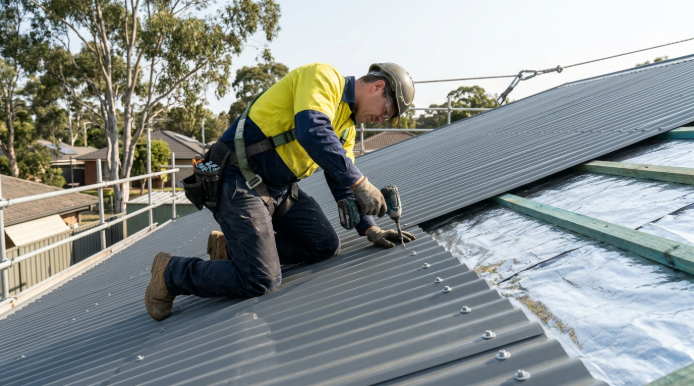
Most installers use Type 17 roofing screws with a neoprene or EPDM washer. The washer squeezes down and seals the hole so water can’t get in.
Why Do Side Laps and Gutter Overhang Matter?
A side lap is where one sheet overlaps the next. Corrugated profiles have a small channel designed to stop water creeping sideways by capillary action. If the laps are sloppy, water can wick into the roof space and stain your ceiling.
Sheets should also overhang into the gutter, commonly by about 50mm, so water falls into it instead of running behind it. Small details like this decide whether a roof stays dry for thirty years or starts leaking in three.
If you’re hiring someone, ask whether they follow the manufacturer’s installation guide. A good roofer will say yes without blinking, and a licensed local roofer can also tell you what your council or wind region requires.
How Much Do Corrugated Roof Sheets Cost?
What Affects the Price?
Prices move with steel costs, so any number printed in a blog gets old fast. Here’s what drives the bill:
- The coating. Zincalume usually costs less than Colorbond.
- The thickness of the steel.
- Sheet length and how many you need.
- Delivery distance, especially to regional areas.
- Extras like screws, flashings, ridge capping, and insulation.
For a real figure, get written quotes from at least three suppliers using the same measurements. Comparing like for like is the only fair way to read them.
Do Coastal Homes Need Something Different?
Often, yes. Salt air attacks metal. Homes close to the ocean, particularly within about a kilometre of breaking surf, may need a coating built for harsh conditions, such as Colorbond Ultra. Some warranties only apply if you use the right product for your distance from the sea. Read the warranty terms before you buy, not after the sheets arrive.
Is the Cheapest Roof Really the Cheapest?
Usually not. A low price now can turn into patch jobs and early replacement later. Good steel sheets, fitted properly, can last decades. When you compare quotes, think about cost per year of life, not just the number on the first invoice.
How Do You Look After a Corrugated Tin Roof?
How Often Should You Clean It?
Rain rinses the open parts of your roof, but sheltered spots like under the eaves stay dirty. Dust, leaf litter, and salt build up there and can eat into the coating. Once or twice a year, rinse those areas with fresh water and a soft brush. Clear the gutters too, especially after autumn leaf drop and big storms. Stay off the roof if it’s wet or steep, and use a safe harness or hire a pro if you’re unsure.
Which Metals Should Never Touch Your Roof?
Surprisingly, this is something that most people do not know. It is advisable to keep coated steel separate from copper and lead because any contact between rainwater dripping from copper or lead flashing and coated steel will cause galvanic corrosion to the protective coating very quickly.
What Should You Check Before You Buy?
Here’s a quick list to keep on your phone when you go shopping:
- Pick your material: Colorbond, Zincalume, or clear sheets.
- Confirm your roof pitch is at least 5 degrees.
- Count sheets using cover width, not full width.
- Choose the right base metal thickness for your span.
- Match the fixing pattern to your wind region.
- Use compatible flashings and sealed screws.
- Get written quotes and read the warranty.
Get these right and corrugated roof sheets will keep you dry for a long time. If you want a next step, measure your roof, write down the pitch, and ask two or three licensed local roofers for a quote. Having your numbers ready makes the conversation faster and the prices easier to compare.