

Home maintenance in Australia changes with the seasons, and autumn is the best time to get ahead. The hot summer is over. The wet and windy months are close. Your roof and gutters are about to work very hard. Have you ever watched water pour over the edge of a gutter in a storm? It […]
Home maintenance in Australia changes with the seasons, and autumn is the best time to get ahead. The hot summer is over. The wet and windy months are close. Your roof and gutters are about to work very hard.
Have you ever watched water pour over the edge of a gutter in a storm? It looks harmless at first. But that water can rot wood, crack walls, and leak into your ceiling.
This guide answers the questions Aussie home owners ask most. You will learn what to check, how to do it safely, and when to call a pro. Each part leads to the next, so keep reading. First, let’s look at what this job really means.
What Is Home Maintenance in Australia and Why Does Autumn Matter?
Home maintenance in Australia means the small jobs that keep your house safe, dry, and strong. Some people call it household maintenance. Others call it home maintenance and repair. The idea is the same. You fix small problems before they turn into big bills.
Our weather is hard on houses. We get strong sun, heavy rain, hail, and wind. In some places, we also get bushfire embers and salty sea air. Every season brings a different risk.
Autumn runs from March to May. In the south, trees drop their leaves and fill up gutters. In the north, the wet season is ending, so roofs have taken a beating for months. Either way, autumn sits between summer heat and winter storms.
That gap is your window. Roof and gutter work done now costs far less than storm repairs later. Any good plan for home maintenance in Australia puts the roof and gutters first, because water is the biggest enemy of a house.
So why does the roof need so much attention in autumn? Let’s find out.
Why Is Autumn Roof Maintenance in Australia So Important?
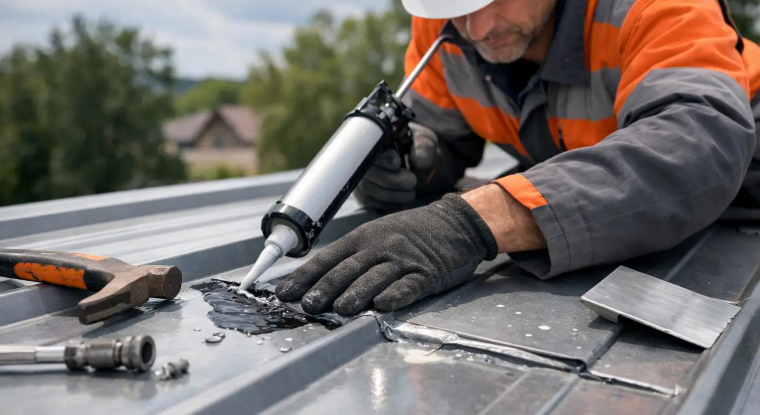
Autumn roof maintenance in Australia stops small damage from growing into big damage over winter. Think of your roof as a giant umbrella. All summer, it sat under hot sun. Heat makes tiles, metal sheets, and sealants swell and shrink. After a while, tiny cracks appear.
Then the rain comes. Water finds even the smallest gap. It runs under tiles, soaks the timber, and stains the ceiling. Mould often follows. Fixing a few loose tiles in April is cheap. Fixing a rotten roof frame in July is not.
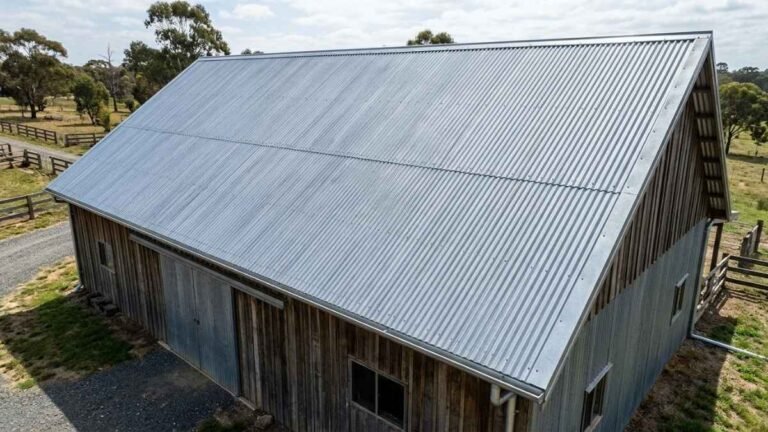
Roofing in Australia is usually one of three types. Many homes have concrete tiles. Some have terracotta tiles. Many others have steel roof sheets. Each type ages in its own way. Tiles crack and slip. Steel sheets can rust and lift at the screws. All of them can collect leaves, moss, and dirt.
Autumn is also the last easy time to work on a roof. In winter, roofs are wet and slippery, and the days are short. In autumn, the weather is milder and the light is good. You can see problems clearly.
Before you climb or check anything, though, you need the right gear and a safe plan. That comes next.
What Tools and Safety Gear Do You Need for Autumn Roof Maintenance in Australia?
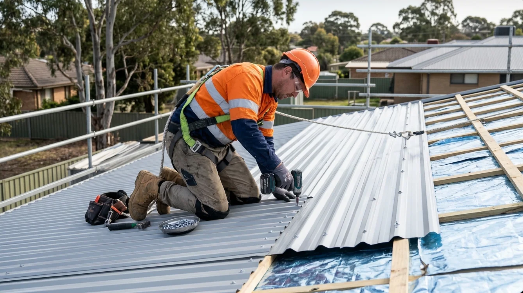
Safety comes first. Falls from ladders and roofs cause many serious injuries every year. No clean gutter is worth a trip to the hospital.
Here is a simple gear list. You need a sturdy ladder, work gloves, safety glasses, and shoes with a good grip. You also need a bucket, a small garden trowel or scoop, a garden hose, and a torch. A phone camera helps too. Photos let you track problems over time.
Now for the rules. Follow the 1 in 4 ladder rule. For every four metres the ladder goes up, set its base one metre out from the wall. Put it on firm, flat ground. Ask someone to hold it. Never lean too far to one side. Move the ladder instead.
Do not walk on a tile roof. Tiles can crack and slide. Do not climb on a wet roof either. And stay far away from power lines.
If your house has two storeys, a steep roof, or a roof you just don’t feel safe on, stop. Call a licensed pro. Safe Work Australia shares clear guidance on working at heights, and it is worth a read before any roof job.
With your gear ready and your plan set, you can start the first real task. Let’s look at the roof itself.
How Do You Check Roofing in Australia Step by Step?
Good roofing in Australia starts with a careful look. You don’t need to climb up to do it. Start on the ground, then go inside.
Step 1 is the ground check. Walk around the house and look up at the roof. Binoculars or the zoom on your phone camera work well. Look for these signs:
Cracked, chipped, or slipped tiles.
Crumbling mortar along the ridge caps.
Rusty spots or lifted screws on steel sheets.
Bent or loose flashing. Flashing is the metal strip that seals joins around chimneys and vents.
A sagging roofline.
Green moss or black lichen patches.
Branches hanging over the roof.
Step 2 is the inside check. Go into the ceiling space with a torch if it is safe to do so. Look for damp patches, dark stains, or beams of daylight. Daylight means there is a gap. Also sniff for a musty smell. That often points to a slow leak. Check the ceilings in your rooms for brown rings or peeling paint too.
Write down everything you find. Take photos. This list becomes your repair plan, and it helps when you ask for quotes.
Small problems like a few loose tiles may be a simple fix for a handyman. Large problems, like a sagging roof or widespread rust, need a roofer.
Once you know the roof’s condition, you can think about getting it clean. So how does roof cleaning work?
When Should You Do Roof Cleaning in Autumn?
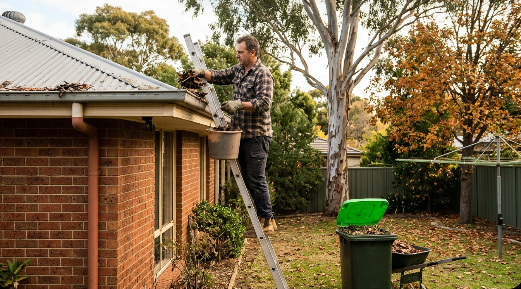
Roof cleaning is best done after your roof check and before the heavy rain starts. Why? Dirt, moss, and leaves hold water against the roof. That water slowly wears down tiles and paint. A clean roof sheds water the way it was built to.
Here is a simple way to think about it. A roof covered in moss is like a wet sponge sitting on your house. It never really dries out.
There are two main ways to clean a roof. The first is gentle washing, often called soft washing. It uses low pressure and a cleaning mix to kill moss and lichen. The second is high-pressure washing. This one can look quick and shiny, but it can chip tiles and push water under them. For that reason, many pros prefer the gentle way.
If you want to try light roof cleaning yourself, stay on the ground. Remove loose leaves and twigs you can reach with a long-handled soft brush. Leave moss and heavy dirt to a pro who works at heights every day.
Also remember the roof drains into your gutters. If you wash the roof first, the dirt and moss will land there. So always do the roof first and the gutters second.
Speaking of gutters, they are the next stop. And in autumn, they matter more than most people think.
Why Is Gutter Cleaning in Australia a Must Every Autumn?
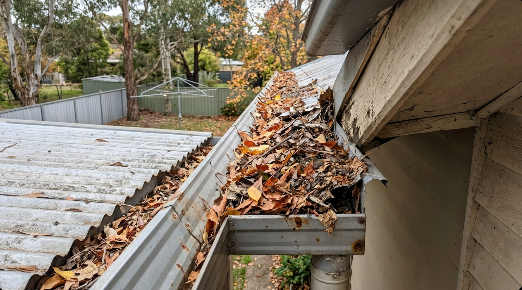
Gutter cleaning in Australia is a must because gutters carry rain away from your house. When they are full of leaves, they can’t do their job. Water spills over the edge or backs up under the roof.
Think about what happens next. Water running down the walls can damage paint and bricks. Water pooling near the base of the house can harm the foundations. Water sitting in a blocked gutter can rust steel and rot the wooden boards behind it. Standing water is also a perfect home for mosquitoes.
There is a fire risk too. In bushfire areas, dry leaves in gutters can catch fire from flying embers. The CFA and other fire services tell home owners to keep gutters clear before fire season. Autumn clean-up helps you get ready long before summer returns.
If you collect rainwater in a tank, dirty gutters can also fill your tank with leaf mess and dirt. That can spoil the water.
So when should you check? At least once in autumn. If your home has big trees nearby, check again in late autumn after most leaves fall. Many homes near gum trees need a gutter clean even more often.
Now for the real question. How do you actually do it?
How Do You Do a Gutter Clean Safely, Step by Step?
Cleaning gutters is simple, but it takes patience. Pick a dry day with no wind. Here are the steps:
- Set up your ladder on firm ground using the 1 in 4 rule. Wear gloves and glasses.
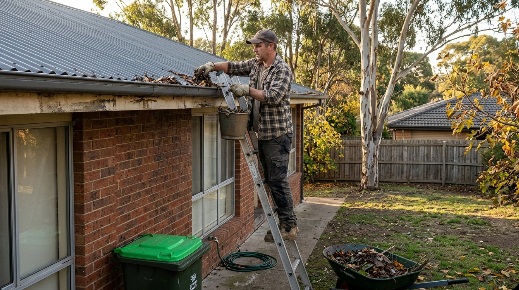
- Start near a downpipe. Scoop out leaves and dirt with your trowel. Put the mess in a bucket. Don’t drop it on the ground below, because you will have to pick it up twice.
- Work along the gutter in small sections. Move the ladder often. Do not stretch.
- Once the big mess is gone, flush the gutter with a hose. Start at the end farthest from the downpipe. Watch how the water moves.
- Check the downpipe. If water drains slowly or not at all, it is blocked. Push a hose into the top of the pipe to clear it. A plumber’s snake can help with stubborn clogs.
- Look for damage while you work. Check for rust holes, loose brackets, gaps at joins, and sagging sections. Water should flow downhill to the downpipe with no puddles.
The whole job can take a few hours for a normal house. It takes longer if the gutters are very full.
Not everyone wants to spend a Saturday on a ladder, though. That brings up another question.
Should You Hire Gutter Cleaning Services in Australia?
Sometimes yes. Gutter cleaning services in Australia are a smart choice in a few cases. If your house is two storeys, hire a pro. If your roof is steep, hire a pro. If you have a health problem, a bad back, or a fear of heights, hire a pro. Safety matters more than saving a few dollars.
Pros also bring tools you may not own. Many use gutter vacuums with long poles, so they can clean from the ground or from a safe platform. They also have the right insurance and safety training.
Before you hire, ask these questions:
Are you insured? Ask to see proof.
Do you work at heights safely, with the proper training?
Will you give me a written quote with the price up front?
Do you take photos before and after the job?
Will you clean the downpipes too?
Will you take the waste away?
A good company will answer these clearly. Be careful of anyone who knocks on your door and offers a cheap deal on the spot. Always get at least two quotes.
Many gutter cleaning services also check for small repairs while they are on site. That saves you a second visit. If a company offers roof cleaning too, ask if it uses a low-pressure method.
Of course, no two homes are the same. A house on the coast has different needs than a house in the bush. So let’s talk about a plan that fits your home.
What Does Custom Home Maintenance Look Like for Your House?
Custom home maintenance means building a plan around your own house, not copying a plan from someone else. It is a smart way to handle home maintenance in Australia because our country is so big and so different from place to place.
Here are a few examples.
A home in a bushfire area should clear gutters and roof valleys more often. It should also keep tree branches trimmed back from the roof.
A home near the sea faces salt in the air. Salt can eat at steel roofs, screws, and gutters. Rinse them with fresh water and look for rust more often.
A home in the tropical north faces strong storms and heavy rain. Check that roof fixings are tight before the wet season and cyclone season.
An older home may have old gutters, rusted brackets, or worn roof sealant. It may need closer checks and sooner repairs.
A home surrounded by big trees will collect more leaves. It may need a gutter clean every few months.
Start with a simple yearly calendar. Pick one weekend each season for checks. Autumn is for the roof and gutters. Spring can be for walls, windows, and decks. Summer can be for the garden and the cooling system. Winter can be for the inside of the home. Over time, this steady habit makes household maintenance feel easy rather than stressful.
Now, let’s put all of this into one short list you can print.
What Is the 7-Step Autumn Checklist for Home Maintenance in Australia?
Here is your quick checklist. Use it as a guide each year.
- Plan and stay safe. Pick a dry day, gather your gear, and set up your ladder properly.
- Check the roof from the ground. Look for cracked tiles, rust, loose flashing, and moss.
- Check inside the ceiling. Look for stains, damp spots, and daylight.
- Handle roof cleaning. Remove loose debris yourself, and let a pro deal with moss and heavy dirt.
- Clean the gutters. Scoop out leaves, then flush with water.
- Clear the downpipes. Make sure water flows out freely.
- Fix, record, and schedule. Repair small problems, take photos, and set a reminder for next time.
Even with a clear list, people still have questions. Here are the ones we hear most.
FAQs
How often should I do home maintenance in Australia?
Most homes need a full check twice a year, in autumn and in spring. Quick checks after big storms are also smart. Homes near many trees may need more.
When is the best time for autumn roof maintenance in Australia?
Late March to May works well in most parts of the country. Aim for a dry, calm day. In the north, do it before the next wet season starts.
How often should I do gutter cleaning in Australia?
Do it at least once a year. If you live near large trees, do it every three to four months. Check again after a big storm.
Can I do a gutter clean by myself?
Yes, if your home is single storey and you feel safe on a ladder. Use the 1 in 4 rule, wear gloves, and never overreach. For tall homes or steep roofs, hire a pro.
How much do gutter cleaning services in Australia cost?
Prices change by city, house size, and how blocked the gutters are. The best way to know is to get two or three written quotes.
Is roof cleaning really needed?
It is helpful. Moss, lichen, and dirt hold water against your roof and wear it down. A gentle clean can help your roof last longer. Always ask about low-pressure methods.
What is the difference between home maintenance and repair?
Maintenance is the regular care that prevents problems, like cleaning gutters. Repair is the fix after something breaks. Good home maintenance and repair work together to keep costs down.
Final Thoughts: Start Your Home Maintenance in Australia This Autumn
Your roof and gutters protect everything under them. A few hours of autumn work can save you from leaks, mould, and big repair bills in winter. Home maintenance in Australia doesn’t need to be hard. It just needs a plan and a little time.
Start with the safety rules. Check the roof, then clean it. Clear the gutters and the downpipes. Hire help when the job is too high or too hard. Then write it all down so next year is easier.
Pick a dry weekend and begin. Your future self, standing safe and dry in July, will be glad you did.
AUTHOR: Welcome to Smart Home Renovators, your trusted source for creative home improvement ideas and practical renovation guides in Australia. Explore stylish home decor, modern interior design tips and smart solutions to improve your living spaces. Discover useful advice on roofing, flooring, remodelling, and energy-efficient home upgrades. Find inspiration, compare ideas and make better decisions for a more comfortable and beautiful home.