

How to secure sliding doors is a question most people ask after a scare, not before. A neighbour gets broken into, or you notice the glass rattles when you pull the handle. Then you look at the little latch that came with the door and realise a firm shove could beat it. Sliding doors are […]
How to secure sliding doors is a question most people ask after a scare, not before. A neighbour gets broken into, or you notice the glass rattles when you pull the handle. Then you look at the little latch that came with the door and realise a firm shove could beat it.
Sliding doors are big panels of glass sitting in a track, and the factory lock is often the weakest part of the setup. The fix costs less than most people expect. Some upgrades take ten minutes and a few dollars.
Here are nine methods, from a bar in the track to a smart sliding door lock. You’ll also find tips for outdoor sliding doors, advice for renters and a section on taking a door off its track.
Why Sliding Doors Are a Weak Point in Many Homes
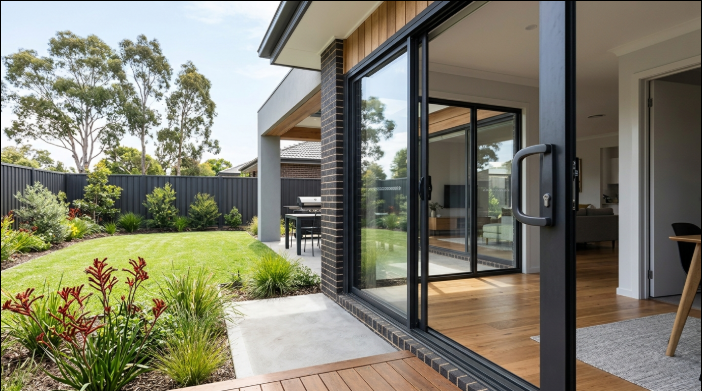
Most sliding doors ship with a hook latch. It’s a thin piece of metal that catches the frame and does little else. Pry the door with a screwdriver, or lift it, and the latch lets go.
The panel is part of the problem too. Many doors can be lifted up and out of the bottom track because the top track has plenty of spare room. Worn rollers add a gap you can wiggle.
Back doors also tend to face the yard, away from the street. That gives anyone trying the handle more time and less attention.
None of this means your door is a lost cause. It means a few cheap upgrades can change the picture quite a bit.
Check Your Sliding Door Before You Buy Anything
Knowing how to secure sliding doors starts with testing the one you already have. Lock it, then try to slide it open. Next, grab the handle and lift the panel upward. Does it jump in the track? Does it rattle? Can you see a gap between the panel and the frame?
Look at the latch, the rollers and the track. A bent latch, flat spots on the rollers or a track full of grit all point to jobs you can do in an afternoon.
This guide is about external doors. Interior sliding in door styles, like cavity sliders and wardrobe doors, don’t face the same risk, so you can skip most of the steps below for those.
Write down what you find. It tells you which methods you need.
Method 1 – Clean the Track and Fix Worn Rollers
A door that glides smoothly also closes properly. A door that sticks tends to get left half-shut.
Vacuum the bottom track, then scrub it with an old toothbrush. Wipe it dry and spray a little silicone lubricant along it. Skip heavy oil, because it collects dust and turns to sludge.
Look at the rollers while the track is clean. If the door scrapes or sags on one side, the adjustment screws on the bottom edge let you raise or lower each corner. Worn rollers are cheap to replace, and a hardware store can match them if you bring one in.
Getting the door to sit square means the latch lines up with the frame the way it should.
Method 2 – How to Secure Sliding Doors With a Track Bar
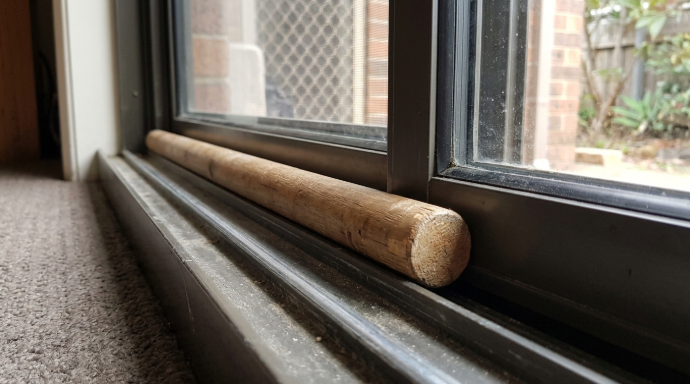
The classic answer to how to secure sliding doors is a bar in the track. It blocks the panel so it can’t slide, no matter what happens to the latch.
Cut a piece of timber dowel, or a length of metal, to fit the gap between the closed panel and the frame. Sit it in the bottom track. Adjustable bars that fold or telescope are sold at hardware stores for a few dollars.
A bar is a good backup when you’re home or heading to bed. It has two limits. It only works if someone puts it in, and it does nothing to stop the panel being lifted out. Pair it with Method 4.
Method 3 – Add a Second Sliding Door Lock
Part of how to secure sliding doors is not relying on one lock. The built-in latch shouldn’t be the only sliding door lock you have.
Here are the common types:
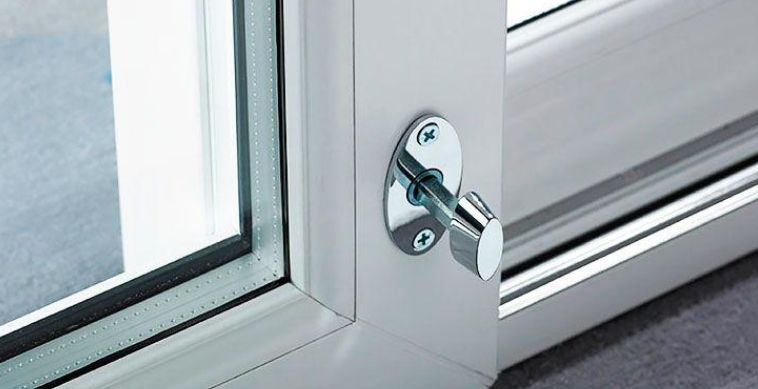
A pin lock. You drill through the sliding panel’s frame and into the fixed frame, then drop a steel pin through the hole.
A keyed surface lock. It bolts onto the frame and locks with a key.
A clamp or slide on door lock. It grips the track and stops the panel moving, with no drilling at all.
A foot lock. It’s a small lever at the bottom that you push down with your foot.
If you can, fit the second lock at a top or bottom corner, away from the handle. That spreads the points of resistance across the door.
With a keyed lock, keep the key somewhere everyone at home can find in a hurry, but not on a hook beside the glass.
Method 4 – Fit Anti-Lift Screws or Blocks
Anti-lift screws are the most overlooked part of how to secure sliding doors. Many panels can be lifted straight out of the track, and these stop that.
The job takes about ten minutes. Close the door. Drill two or three small pilot holes along the upper track, just above the top of the panel. Drive in short pan-head screws so the heads sit a millimetre or two above the door frame. The door still slides, but it can’t rise high enough to tilt out.
Use self-tapping screws on aluminium, and keep clear of the glass. Test by sliding the door back and forth, then try to lift it.
Take these screws out again if you ever need to remove the door, which is covered further down.
Method 5 – Strengthen the Glass With Laminated Glass or Security Film
Standard toughened glass breaks into small pieces. Laminated glass has a plastic layer in the middle, so it cracks but stays in one sheet. That makes it much slower to get through.
If you’re replacing your sliding doors, ask your glazier for laminated glass. If you’re keeping the panels you have, security film is a cheaper step. It’s a thick, clear layer stuck to the glass that holds the pieces together when the glass is hit.
Film isn’t magic. It buys time, and time is the whole point. For the best result, have a professional fit it and anchor it into the frame.
Method 6 – Install a Security Screen Door
A security screen door sits outside your sliding door. It’s made of stainless steel mesh or aluminium bars, and it locks with a key, usually at more than one point.
This is the strongest option on the list when it comes to how to secure sliding doors. It also lets you open the sliding panel for fresh air while the screen stays locked.
Look for products tested to AS 5039, the Australian Standard for security screen doors and security window grilles. Standards Australia has more on how standards like this work.
Expect to pay more than you would for a bar or a lock. A quote from a local installer will show you the real figure for your door size.
Method 7 – Add Door Sensors and Alarms
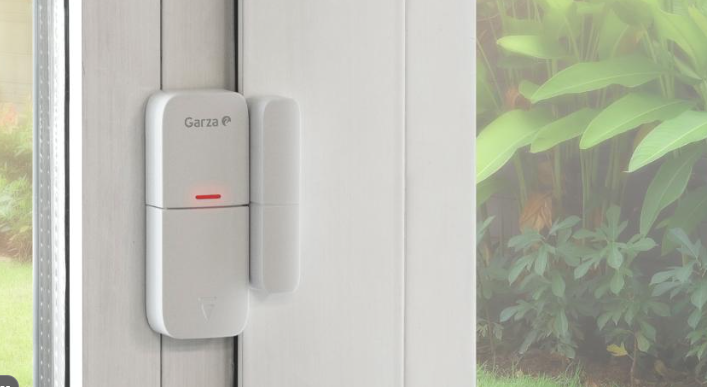
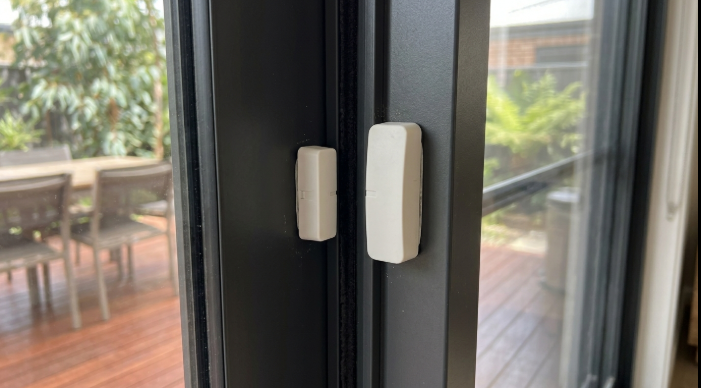
A door contact sensor is two small pieces, one on the panel and one on the frame. When they separate, an alarm sounds or your phone gets a notification. Battery-powered ones cost a few dollars and stick on without tools.
Glass-break sensors listen for the sound of smashing glass. A motion sensor inside the room covers the gap if someone gets past the door.
Method 8 – Use a Smart Sliding Door Lock and a Camera
Retrofit smart locks for sliding doors do exist. Many are bolt-style units that fit onto the frame and let you lock the door from your phone or with a code. Check that the product suits your frame before you buy.
Be realistic about it. A smart sliding door lock won’t stop a pry bar on its own, so treat it as an extra layer, not a replacement for a track bar or anti-lift screws.
A camera facing the yard adds another layer. It tells you something happened, and a visible one often makes people think twice.
Method 9 – Light Up the Area and Clear Hiding Spots
Lights, sightlines and a bit of tidying go a long way.
Fit a motion-sensor light over the door. Our outdoor lighting ideas page has plenty of options. Trim shrubs that give anyone cover near the glass. Move ladders, bins and outdoor furniture that could be used as a step.
Don’t hide a spare key under a pot. It’s the first place people look.
The NSW Police Force has general home security tips at NSW Police Force, and your own state police website will have similar advice.
How to Secure Outdoor Sliding Doors on Decks and Balconies
Outdoor sliding doors have to put up with weather as well as people. Sun, rain and salty air wear down tracks and hardware faster than they do inside. Check them every season.
Look for rust on locks and screws, and swap rusty hardware for stainless steel. Check the seals and brushes along the edges, since gaps let in wind, water and dust. Clear leaves out of the track so the door closes fully.
Upper-floor doors still need locks. People climb balcony posts, pergolas and garage roofs. Lock the door when you leave, even if it’s two storeys up.
On a ground-floor deck, use every method above. On a balcony, a track bar, anti-lift screws and a second lock cover the main points.
How to Secure Sliding Doors When You Rent
Renters can’t always drill into a frame, but plenty of upgrades need no tools.
A bar in the track costs next to nothing. A clamp or slide on door lock grips the track and comes off when you move out. A battery door alarm sticks on with adhesive. A plug-in light on a timer, or a camera with an adhesive mount, works too.
Rules differ between states and territories, so check your tenancy authority’s page on minimum security standards. If the lock is broken or the door is worn out, ask your landlord or property manager in writing and keep a copy.
How to Remove a Sliding Door Safely
You might need to take the panel off to fit a new lock, replace rollers, clean the track or swap the glass. Doors vary, so read the manual if you have one.
Glass panels are heavy, often well over 30 kilograms, and awkward to hold. Get a second person and wear gloves and sturdy shoes.
- Remove the flyscreen door first, if you have one.
- Take out any anti-lift screws or stops in the top track.
- Slide the panel halfway open so you can reach the bottom edge.
- Check the roller adjustment screws on the bottom edge. If the panel won’t lift clear, adjust them in small turns to change its height.
- Hold the panel on both sides and lift it straight up so the top rises into the upper track.
- Keep it lifted while you tilt the bottom edge toward you and out of the bottom track.
- Lower the top edge out and stand the panel on a blanket, leaning against a wall.
To put it back, reverse the steps, then refit the anti-lift screws. The fixed panel next to it usually stays where it is.
If the door is stuck, the glass is cracked or you’re not sure what you’re looking at, call a glazier.
Layers Beat a Single Fix
No one product does everything. The strongest setup uses a few together: a smooth, square door, a bar in the track, a second sliding door lock, anti-lift screws and a light outside. Add film, a security screen or a sensor if you want more.
Start today with the free and cheap steps. Clean the track, fit the screws, and install a bar. Then decide how far you want to go.
FAQs About How to Secure Sliding Doors
How to secure sliding doors quickly and cheaply?
Put a bar in the track, add anti-lift screws and fit a pin or clamp lock. All three cost very little and take under an hour. A battery door alarm adds an extra warning.
How do I remove a sliding glass door?
Get a helper, wear gloves, and take off the flyscreen and any anti-lift screws first. Lift the panel up into the top track, swing the bottom edge out and lower it. Glass is heavy, so rest it on its edge against a wall.
How do you remove a sliding door?
It depends on the type. External glass doors lift up and out of the track, as covered above. Interior wardrobe doors usually hang from a top track and lift off once you free the bottom guide. Look for stops or screws before you pull on anything.
How do you remove a sliding glass door?
The idea is the same as with any panel: free the track, lift up, tilt out. Take your time and keep the glass upright. If the glass is cracked, don’t lift it yourself. Call a glazier.
How do you remove a sliding patio door?
Start with the flyscreen, then the sliding panel. The fixed panel beside it is usually screwed or bracketed in and is best left alone. If you’re replacing the whole patio door set, a glazier or builder should handle it, since the frame is part of the wall opening.
What is the best sliding door lock?
There isn’t one best option. A keyed or pin lock on the frame, paired with a track bar, is a strong and low-cost combination. A security screen door gives the most protection overall.
Do outdoor sliding doors need extra locks?
Yes. Outdoor sliding doors on decks and balconies get tested by weather as well as people. Use stainless steel hardware, a second lock and anti-lift screws, and lock upper-floor doors too.
