
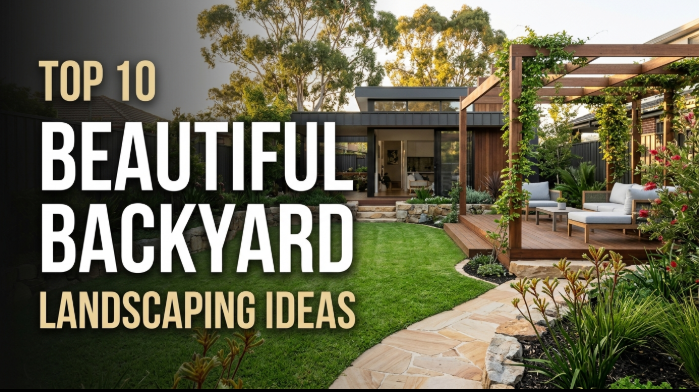
Backyard landscaping ideas are easy to find and hard to choose between. One page says timber deck, the next says gravel and grasses, and your own yard has a slope on one side, shade on the other and a clothesline in the middle. This guide covers 10 backyard landscaping ideas that work in real Australian […]
Backyard landscaping ideas are easy to find and hard to choose between. One page says timber deck, the next says gravel and grasses, and your own yard has a slope on one side, shade on the other and a clothesline in the middle.
This guide covers 10 backyard landscaping ideas that work in real Australian yards. You’ll get notes on cost, upkeep and which jobs are worth handing to a tradie. It also covers how decking, concrete, plants and lighting fit together, plus a short planning section so you know what to build first.
Plan Your Landscape Design Before Choosing Backyard Landscaping Ideas
Good landscape design starts with a sketch, not a shopping list. Draw your block on paper, roughly to scale. Mark the house, fences, trees, taps, drains and the clothesline. Note where the sun lands at 9am and 3pm.
Next, write down how you actually use the yard. Do you have kids, a dog, a barbecue habit or a veggie patch? Is there a spot where you’d like a quiet chair? Your answers show which backyard landscaping ideas deserve space and which can wait.
Set a budget early. Hard surfaces like decking and concrete usually take the biggest share, while plants and mulch cost far less. Our home renovation budget guide helps you split the money sensibly.
Check the rules too. Council or building permits can apply to higher decks, retaining walls and big concrete pads. The Victorian Building Authority explains when approval is needed in Victoria, and other states have similar bodies.
Idea 1: Classic Timber Decking for Outdoors
Timber is still the first answer when people ask about decking for outdoors. It looks warm, it suits most house styles and it’s easy to cut to fit odd shapes.
Hardwoods like spotted gum last well and handle sun and rain. Treated pine costs less but needs more care. Either way, plan to oil or seal the boards about once a year, or they’ll go grey and start to split.
Pick the spot with care. A deck near the back door makes the yard feel like an extra room. A deck at the far end of the block gives you a reason to walk outside.
Slopes are where timber shines. Posts and bearers can sit at different heights, so you can level the surface without moving tonnes of soil.
Idea 2: Composite and Artificial Timber Decking
Composite decking is made from wood fibre and recycled plastic. Artificial timber decking works on the same principle, with a colour and grain that copy real boards. Both skip the yearly oiling. A wash with a hose and soft brush is usually enough.
Different deckings behave differently, so check a few before you buy. Some stay cool underfoot. Others get hot in full sun, so test a sample board on a warm day. Colours can also fade a little over the first year.
The price is higher than treated pine, but you save on upkeep. If you live in a bushfire-prone area, check the product’s bushfire rating before you commit. The CFA has guidance on building in fire-prone areas.
If you want a lower-effort backyard landscaping idea, this is a strong pick.
Idea 3: A Concrete Patio or Slab for Concreting Melbourne Homes
A slab is the hardest-wearing surface in the yard. It takes furniture, barbecues, kids’ bikes, and wheelbarrows, and it needs little maintenance.
Concrete concreting jobs vary a lot. You can have a plain broom finish, exposed aggregate, a coloured surface or a stamped pattern. Exposed aggregate grips well when wet, which suits pool surrounds and paths.
For concreting Melbourne homes often need to deal with reactive clay soil, which swells and shrinks through the seasons. A good concreter Melbourne locals recommend will prepare the base properly, use the right mesh and place control joints so cracks happen where you want them.
Get at least three quotes. Ask each concreter Melbourne offers about base depth, joint spacing and curing. Let the slab cure for about a week before heavy loads. The Concrete Institute of Australia publishes technical information if you want to read further.
Idea 4: Stepping Stones and Gravel Paths
A path gives the yard a shape. It tells people where to walk and stops the lawn wearing into a muddy track.
Stepping stones are the easiest version. Lay large pavers or sandstone pieces into the lawn with a gap of a stride between each. Set them slightly below the grass so the mower rolls over them.
Gravel is cheaper than paving and drains well. Lay it over weed mat on a compacted base with a steel or timber edge; otherwise, it creeps into the garden beds.
Curved paths feel more relaxed than straight ones. Straight paths suit modern homes. Pick whichever matches your house and the way people move through the yard.
Keep the width at 800 millimetres or more for one person, and 1.2 metres if two people walk side by side.
Idea 5: Native Garden Beds That Need Little Water
Native plants cut watering and give birds and bees something to feed on. They also tend to cope with Australian summers better than imported species.
Good choices include lomandra for tough, grassy structure, kangaroo paw for colour, correa for shady spots and grevillea for flowers most of the year. Check what grows well in your area before you buy, since a plant that thrives in Perth may sulk in Melbourne.
Group plants by water needs. Layer taller shrubs at the back, mid-height plants in the middle and groundcovers at the front. Finish with 75 millimetres of mulch to keep moisture in and weeds down.
Idea 6: Raised Veggie and Herb Beds
A vegetable patch makes the yard useful. Raised beds are easier to manage than digging into poor soil, and they save your back.
Build them about 30 centimetres high and no wider than 1.2 metres so you can reach the middle. Use treated pine sleepers, steel panels or concrete blocks. Fill with a mix of quality soil and compost.
Choose a spot with at least six hours of sun. Put herbs near the back door, because you’ll use them more if they’re close to the kitchen.
Start small. Four tomato plants, some basil, lettuce and a few chillies will teach you what works before you build more beds.
Leave room around each bed for a wheelbarrow, ideally a metre.
Idea 7: An Outdoor Living and Kitchen Area
If you eat outside often, build for that. A dining spot with shade, a bench and a barbecue turns the yard into a second living room.
Start with the surface. Decking or a concrete slab both work well, and the choice often comes down to budget and style. Add a pergola or shade sail for summer afternoons.
Position the kitchen near the house so you’re not running food back and forth. Keep gas bottles and cooking gear away from fences and overhanging branches.
Many ideas of backyard design start here, because this is where people spend most of their time once the weather warms up.
Idea 8: Low-Maintenance Lawn and Turf Choices
Not everyone wants to mow every weekend. If you’d like to cut the work without losing the green, you have options.
Buffalo and kikuyu are tough, drought-resistant lawns that handle foot traffic. Tall fescue stays greener in shade. Synthetic turf needs no water or mowing, although it can get hot in direct sun and doesn’t support soil life.
A smaller lawn is the simplest answer. Shrink the grass area and fill the rest with garden beds, paving or mulch. Less lawn means less water, less fertiliser and less time with the mower.
Whatever you pick, prepare the soil first. Level the ground, remove weeds and add a layer of good topsoil. Skipping that step is why many lawns look patchy within a year.
Idea 9: A Fire Pit Seating Area
A fire pit gives the yard a reason to stay out after dark. Put it away from the house, fences and trees, and build the seating around it in a circle.
Use a fire-safe base like pavers, gravel or concrete. Never place a fire pit on timber decking, and keep a hose or bucket of water close by.
Check local rules. Many councils restrict open fires, and total fire ban days mean no flames at all. A gas fire pit may be allowed when a wood fire isn’t, but you should confirm with your council.
Add built-in bench seating along the edge of a retaining wall. It saves space and works as a garden border the rest of the time.
Idea 10: Lighting and Privacy Screening
Lighting and screening are the finishing touches, and they make a big difference to how the yard feels at night.
Use low-voltage LED lights along paths, steps and garden beds. Solar lights are cheaper, but they dim in winter. Mix a few warm uplights on trees with soft lights near seating. Our [[outdoor lighting ideas]] guide covers placement and wiring options.
For privacy, you can use slatted screens, climbing plants on trellis or a row of tall shrubs like lilly pilly. Screens give instant coverage. Plants take a few years but soften the look.
Backyard Landscaping Ideas on a Budget
Not every project needs a big bill. If money is tight, work in stages and start with the changes that cost the least.
Mulch and plants are the cheapest way to change how a yard looks. Mulch cuts weeds and holds water, and young plants cost far less than mature ones. Swap plants with neighbours, or buy small tubestock instead of large pots.
Do the work yourself where it’s safe. Gravel paths, raised beds and planting are all good DIY jobs. Leave concreting, electrical work and retaining walls above a certain height to licensed tradies.
Buy second-hand pavers, sleepers and furniture from marketplace sites. Check every piece for cracks or rot before you pay.
Finally, build in stages. Do the main surface this year and add the pergola next year.
Common Mistakes With Backyard Landscaping Ideas
A few errors come up again and again.
Skipping the plan. Building a deck first and finding it blocks the only sunny corner is a common regret.
Ignoring drainage. Water should run away from the house. Pooling water near the walls damages footings and floors.
Choosing plants for looks alone. A plant that needs full sun will struggle in shade, however nice the label looks.
Squeezing in too much. A small yard looks bigger with fewer features and more open space.
Underestimating upkeep. Timber needs oil, lawns need mowing and gardens need water. Pick what you’ll actually maintain.
Pulling Your Backyard Landscaping Ideas Together
Pick one main surface, either decking or concrete, and build the rest around it. Then add planting, lighting and screening in stages.
Most good yards combine a few of these ten backyard landscaping ideas rather than every one. A deck with native beds and a fire pit is plenty. A slab with raised veggie beds and a shade sail works just as well.
FAQs About Backyard Landscaping Ideas
What are the cheapest backyard landscaping ideas?
Mulch, small plants, gravel paths and raised beds cost the least. A DIY stepping stone path or a fire pit area built from pavers also keeps costs down.
Is composite decking better than timber decking?
It depends on what you value. Composite decking needs less upkeep and doesn’t need oiling. Timber costs less up front and has a natural look, but it needs regular sealing.
What is artificial timber decking?
It’s a decking board made from composite materials or PVC, designed to copy the look of real wood. It resists rot and termites and needs only occasional cleaning.
How much does concreting cost in Melbourne?
Prices depend on the size, finish, site access and soil. Ask at least three local concreters for a written quote that lists base preparation, reinforcement and finish.
Do I need a permit for decking or concreting?
Sometimes. Height, size, location and local overlays all affect the answer. Check with your council or your state building authority before you start.
How long should new concrete cure before I use it?
Wait about seven days before heavy loads, and around 28 days for full strength. Keep it damp and shaded early on so it doesn’t crack.
What are good landscape design tips for a small backyard?
Keep the layout simple. Use one main surface, add vertical planting on fences and choose furniture that folds or stacks. Mirrors and light colours also make small spaces feel larger.
What can I do with a sloped backyard?
Use terraces, retaining walls or a raised deck to create level areas. Plant the steep parts with groundcovers that hold the soil.